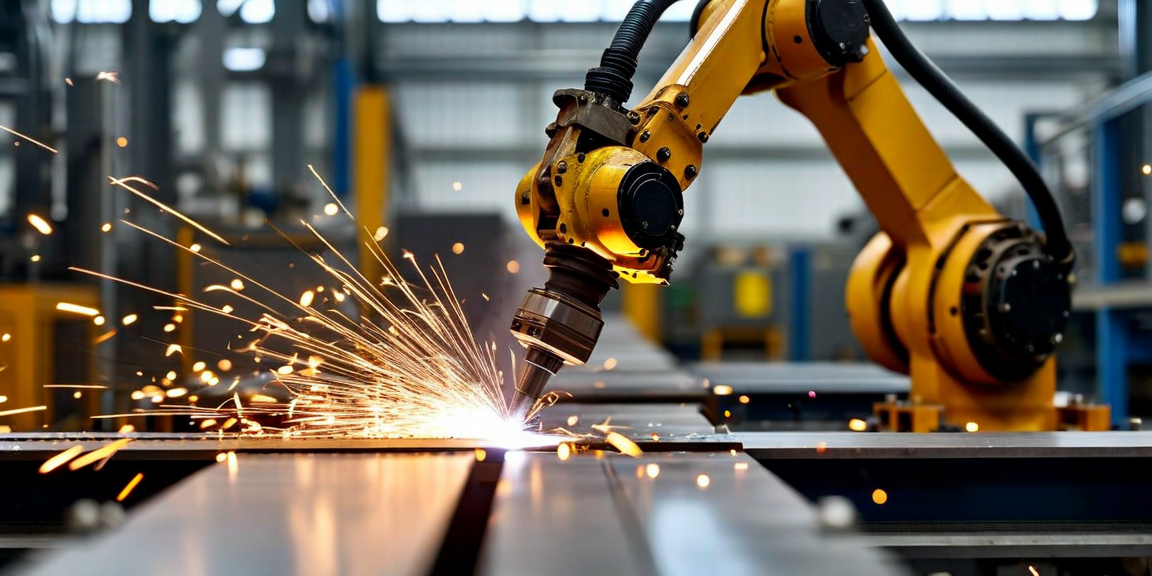
The Robotics Disruption: Why Late-Stage Bets Are Winning Now
For the better part of two decades, sophisticated observers have been predicting the robotics revolution. The predictions have been directionally correct but chronologically wrong — again and again. Now, at the end of 2025, the evidence is overwhelming that we are past the inflection point. The cost curves have crossed, the technology has matured, and the commercial deployments are real. The question is no longer whether robotics will transform industry; it is which investors have the foresight and the capital to be meaningfully positioned when the wave crests.
The Cost Curve Crossover
Robotics hardware has followed a cost trajectory strikingly similar to the curves observed in solar panels, lithium-ion batteries, and semiconductor compute over the past decade. The key enabling components — LiDAR sensors, precision actuators, edge inference chips, and the camera systems that give robots spatial awareness — have each declined in unit cost by 70 to 90 percent over the past eight years. A sensor array that cost $75,000 in 2017 is available today for under $3,500 with superior performance specifications.
This cost reduction is not merely a hardware story. The software systems that allow robots to navigate unstructured environments, handle variable object geometries, and collaborate safely with human workers have advanced at a pace that matches or exceeds the hardware progress. Large model architectures originally developed for language processing have been adapted for robotic perception and manipulation. The result is systems that are not only cheaper but dramatically more capable than anything available five years ago.
When we model the economics of robotic deployment across logistics, manufacturing, agriculture, and construction, we see a consistent pattern: total cost of ownership for robotic systems now beats human labor costs in a widening range of tasks in high-labor-cost geographies. In warehouse picking, autonomous mobile robots operating at scale now carry fully loaded costs of $8 to $12 per hour equivalent, compared to $22 to $35 for human workers including benefits, supervision, and turnover costs. The math has become compelling — not speculative.
Where Deployment Is Happening First
The sectors seeing the earliest and most rapid robotic deployment share a common set of characteristics: repetitive, physically demanding tasks in controlled or semi-controlled environments, significant labor cost exposure, and supply chain pressure to improve throughput reliability. Logistics and warehousing lead the deployment wave, driven by the extraordinary expansion of e-commerce and the structural labor shortages that have made fulfillment center staffing a persistent operational challenge for retailers and 3PLs alike.
Manufacturing is close behind, with automotive, electronics, and consumer goods companies accelerating investments in flexible automation after the supply chain disruptions of 2020 to 2022 exposed the fragility of labor-dependent production models. What is notable about the current manufacturing robotics wave is its breadth: it is not confined to the highly structured assembly line environments where industrial robots have operated for decades, but extending to quality inspection, material handling, and facility maintenance — applications that require adaptability and sensing capability that only became commercially viable recently.
Agricultural robotics is at an earlier but rapidly advancing stage. Precision harvesting, crop monitoring, and autonomous soil management are moving from research to commercial deployment with genuine scale in strawberry, tomato, and specialty crop sectors. The labor dynamics in agriculture are among the most acute of any industry, and the data moats being built by early robotic agriculture platforms are substantial — companies accumulating years of field data across thousands of acres are building predictive agronomic models that will be extremely difficult to replicate.
The Investment Landscape
The venture investment landscape in robotics has matured substantially over the past five years. Seed and early-stage capital is abundant — a reflection of both the genuine quality of robotics startups emerging from university labs and the tendency of investors to follow technology hype. The more interesting and arguably more attractive investment opportunity is in the companies that have moved past technology validation into commercial deployment at scale.
Late-stage robotics investments — in companies with proven hardware-software stacks, signed commercial contracts, and early evidence of unit economics improvement as deployment scales — offer a combination of risk reduction and return potential that is unusual in the current market. The technology risk is materially lower than at seed stage. The commercial model has been validated. But the market has not yet repriced these assets to reflect the full scale of the deployment opportunity ahead.
HyperFor's investment framework looks specifically for robotics companies that have demonstrated three critical milestones: the ability to operate reliably in real commercial environments at a cost that works for the customer without subsidy, the capacity to replicate deployments across multiple customer sites with acceptable configuration investment, and evidence that the data and operational learnings from early deployments are creating compounding improvements in performance and cost. Companies that have cleared these three hurdles represent the most attractive risk-adjusted robotics investment opportunities available.
Software as the Durable Advantage
The most durable competitive advantages in robotics companies are not in hardware. Hardware can be copied, commoditized, and eventually undercut on price. The real competitive moat in robotics is the software layer — the perception systems, the manipulation algorithms, the fleet management platforms, and above all, the accumulated operational data that allows systems to improve continuously over time.
Companies that understand this build their businesses accordingly. They price hardware at cost or slightly below to maximize deployment speed, accepting lower margins on the capital sale in exchange for the data and learning advantages that come from operating at scale. They invest aggressively in software capability, building the reliability and adaptability that allow expansion into adjacent applications. And they structure customer relationships around long-term service contracts that create recurring revenue streams and deep integration that makes switching extremely costly.
This software-first approach to robotics investment is central to HyperFor's thesis. When we evaluate robotics companies, we spend as much time assessing the quality and defensibility of the software and data assets as we do reviewing the hardware specifications. The companies that will generate the most value in the robotics category over the next decade are those that recognize they are software companies that happen to deploy hardware, not hardware companies that happen to run software.
Regulatory Tailwinds and Labor Dynamics
The policy environment for commercial robotics deployment has improved significantly across the major markets where HyperFor invests. Safety certification frameworks that previously required extensive and expensive testing for each new deployment context have been modernized in the US, EU, and major Asian markets to allow faster commercial pathways. Insurance frameworks for robotic liability are becoming more sophisticated and commercially workable. And at the municipal level, the permitting and operational restrictions that initially limited autonomous vehicle and delivery robot deployments are being refined based on real-world operational experience.
Labor dynamics are providing an additional structural tailwind. In every major market, structural labor shortages in the sectors most amenable to robotic deployment — logistics, manufacturing, agriculture, construction — are creating customer urgency that was absent in earlier phases of the industry's development. The conversation has shifted from whether to automate to how quickly automation can be scaled. This urgency compresses the commercial deployment timelines that previously stretched investment return horizons to unattractive lengths.
Key Takeaways
- Robotics hardware costs have declined 70 to 90 percent over eight years, crossing commercial viability thresholds across multiple sectors.
- Logistics, manufacturing, and agriculture are leading the initial deployment wave, with economics that now favor robotic over human labor for a widening range of tasks.
- Late-stage robotic companies with proven commercial deployments represent attractive risk-adjusted investment opportunities that the market has not yet fully priced.
- Software, data, and operational learning — not hardware — are the durable competitive advantages in robotics.
- Regulatory improvements and structural labor shortages are compressing commercial deployment timelines and creating customer urgency.
Explore how HyperFor Robotics Ventures identifies and backs transformative robotics companies on our Portfolio page.